This content is only available with cookies.

You will have to agree to the use of cookies in order to display this content. Please note that, when you agree to the placement of cookies for this content, you automatically consent to their use throughout the website. To revoke your consent at any time, and for further information on the use of cookies, please click on "Details“.

Details Agree
Contact

Our Plant.

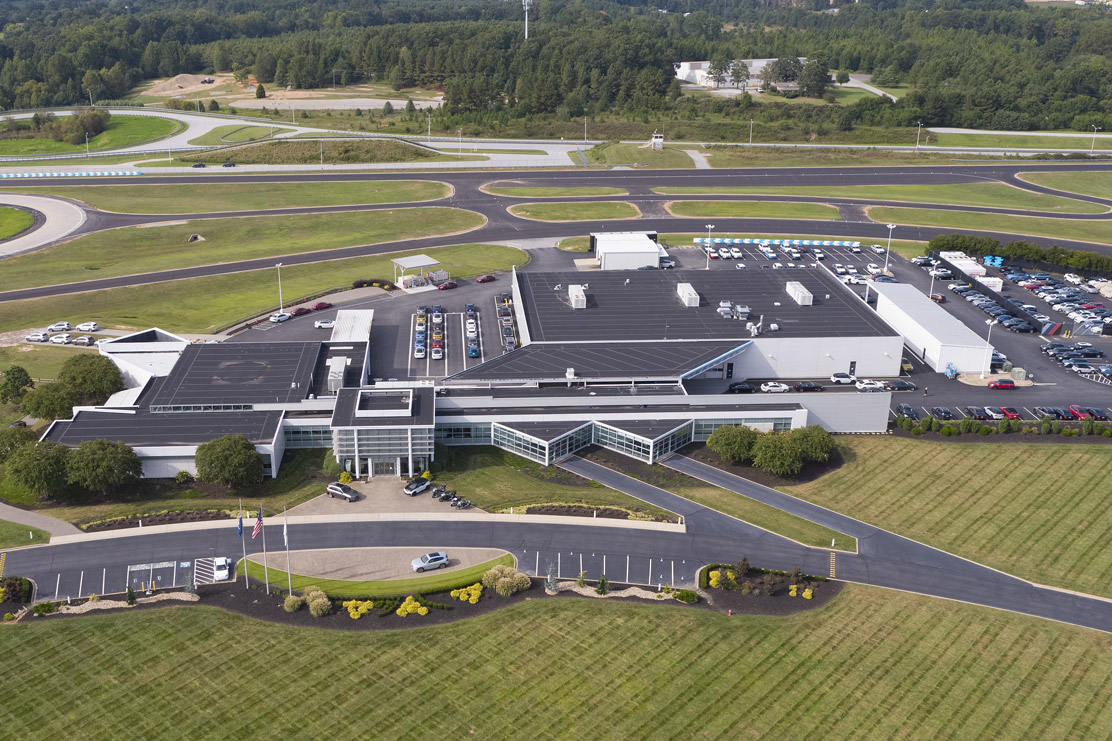
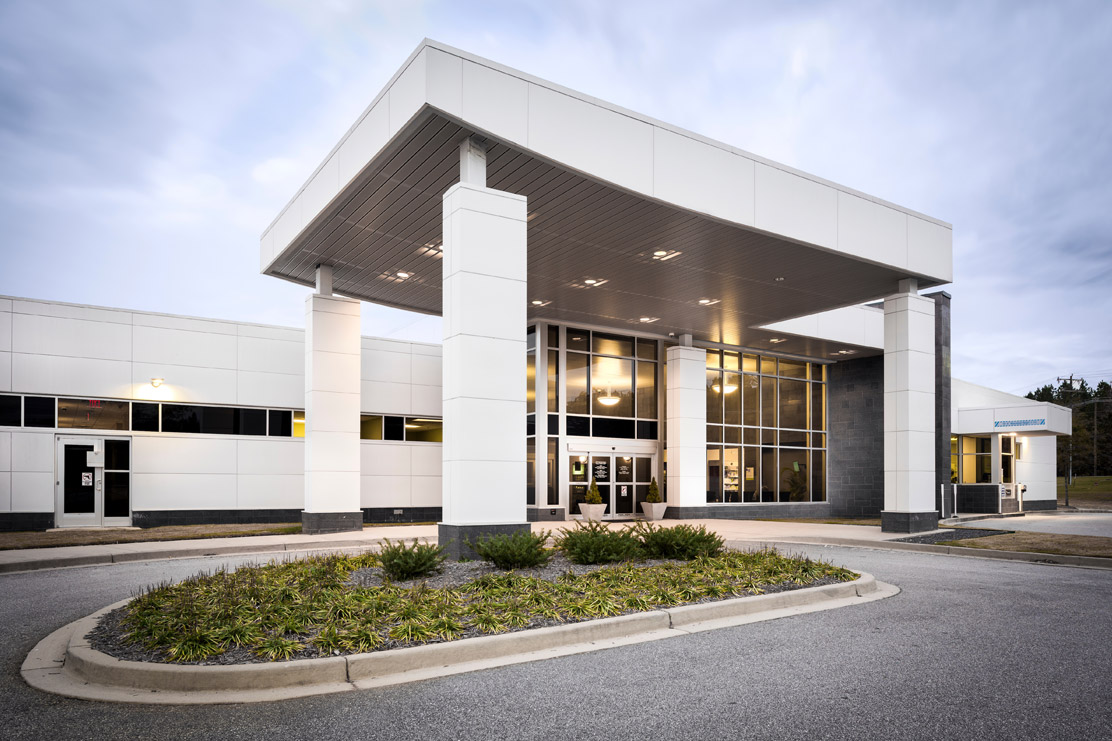
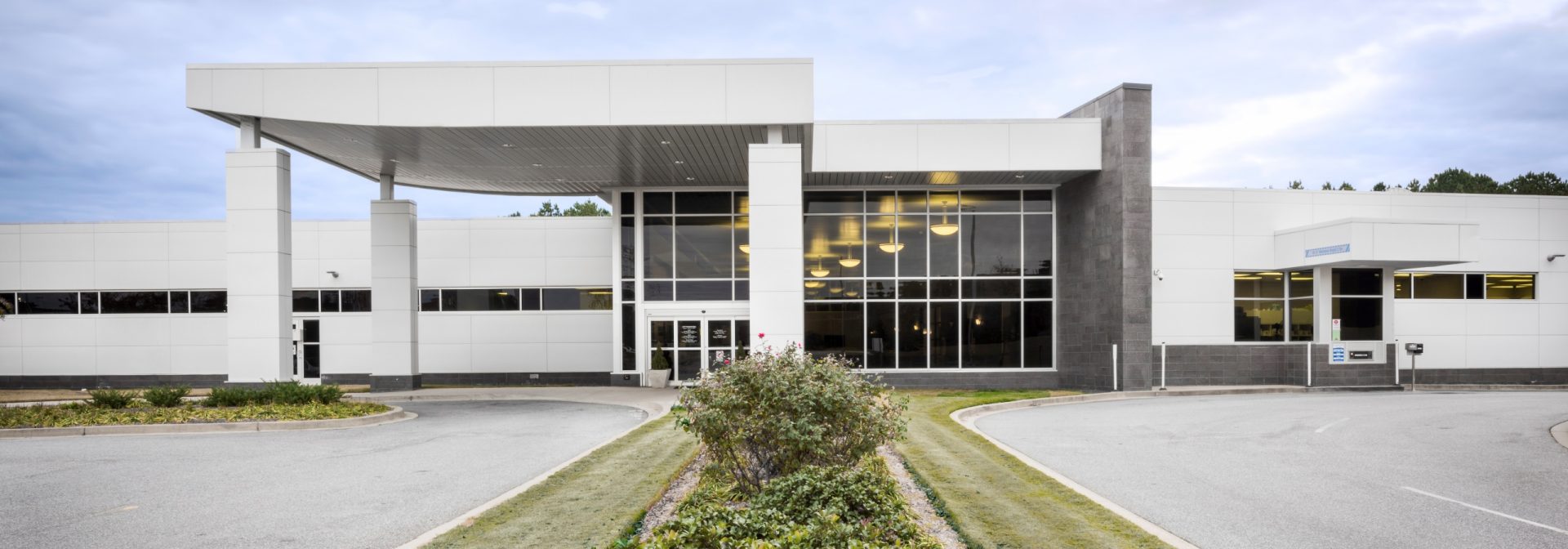
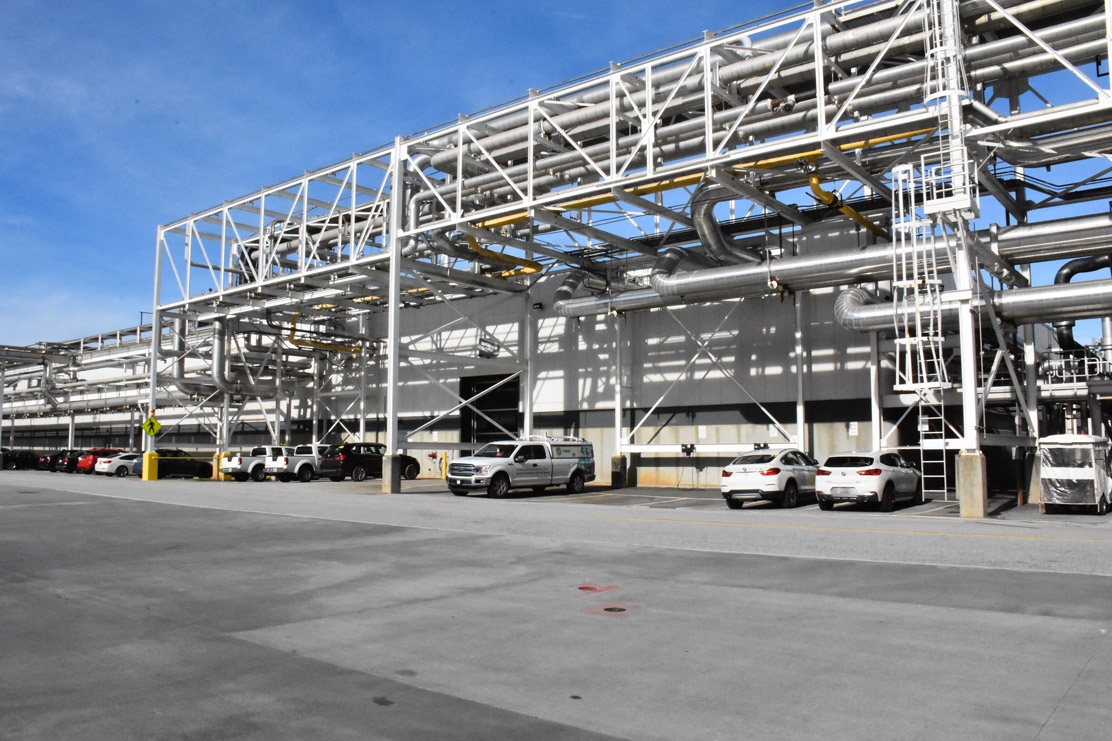
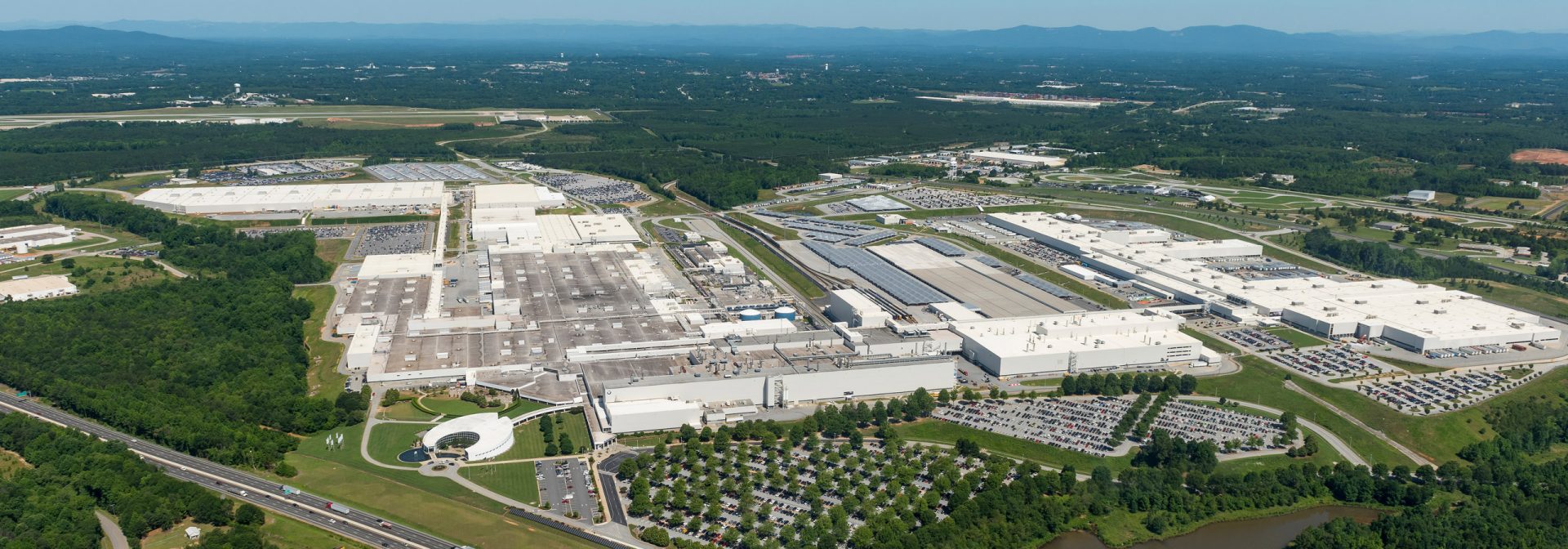
BMW Plant Spartanburg's 7-million-square-foot campus is located right off Highway 85.

BMW Group announced on June 23, 1992, that it would build its first full assembly facility outside of Germany in South Carolina.  At that time, the company pledged to invest $600 million, to employ 2,000 associates by the year 2000, and attract at least nine suppliers to the state. It was the fastest factory start-up in automotive history, a record 23 months from site groundbreaking to first car assembled.

Now over three decades later, the BMW Group has invested nearly 16 billion, and the plant has gone through seven major expansions.  The most recent expansion was announced on October 19, 2022 – a $1.7 billion investment to prepare the plant for the assembly of electric vehicles and to build a high-voltage battery assembly plant in Woodruff, SC. There are more than 11,000 jobs onsite with over 60 direct Tier 1 suppliers located in South Carolina and more than 400 suppliers in the United States.

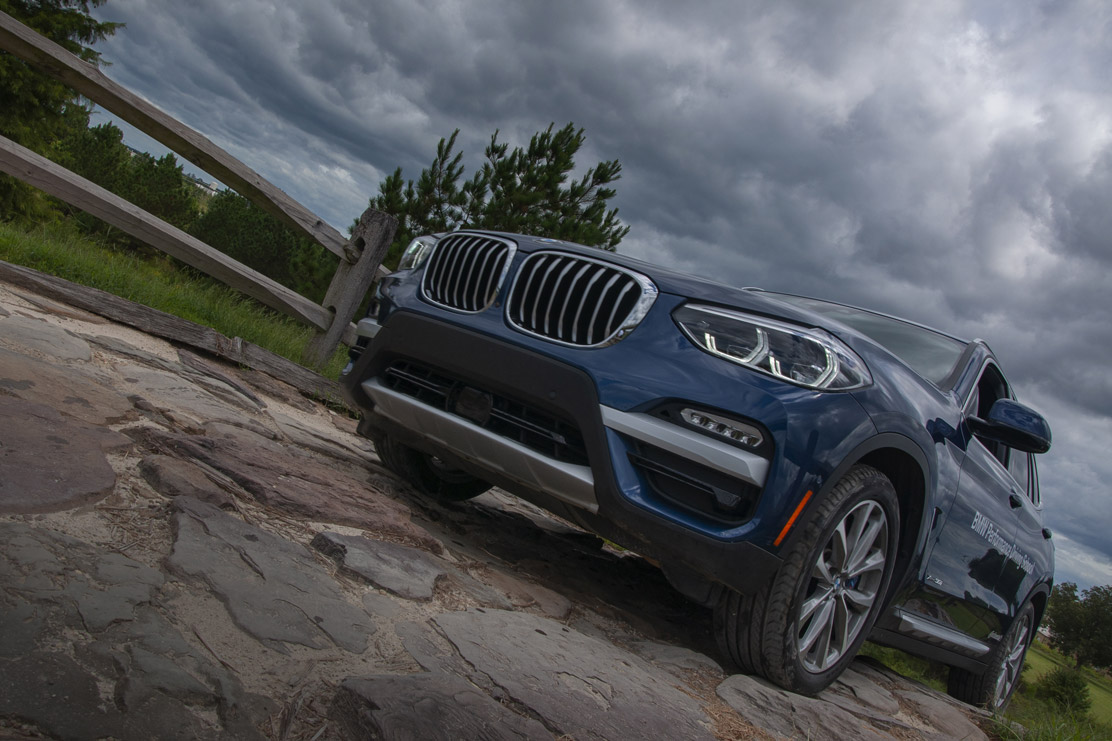
Since 1994 the plant has assembled more than 7.3 million vehicles. Today it assembles more than 1,500 vehicles each day and exports more than 50 percent of its vehicles. Associates at the Spartanburg plant assemble the BMW X3, X5, X6, X7, and XM Sports Activity Vehicles and Coupes and their variants.
Innovation drives us.

At BMW, innovation in assembly technology provides new opportunities to enhance our assembly system. It enables fulfilment of individual customer wishes, increases the flexibility and quality of assembly processes, and improves overall efficiencies. 

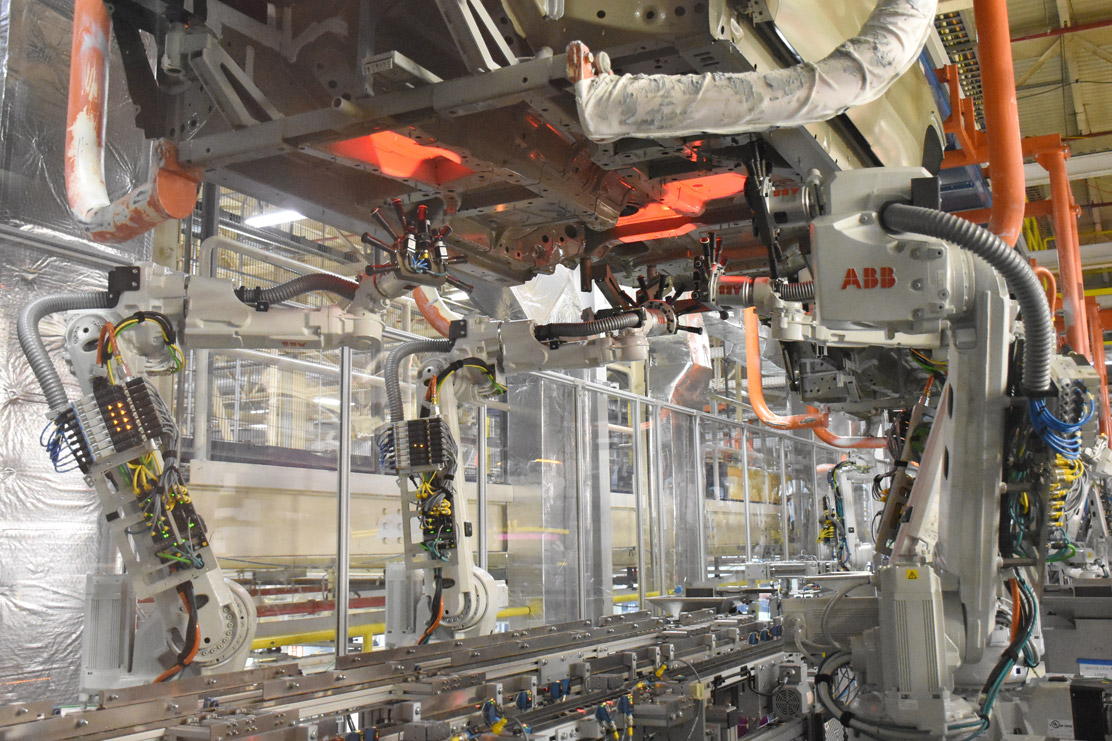
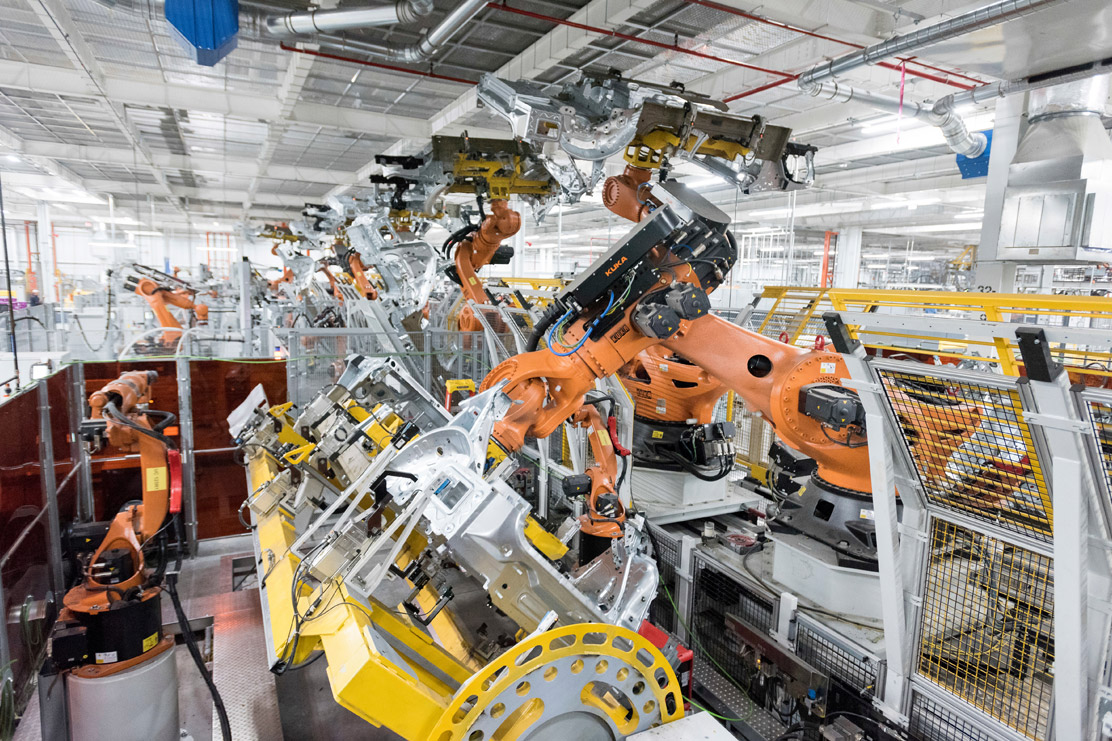
Entire process line in body shop with Titan robots handling the vehicle parts.

Titan Robots.

In the body shop there are more than 2,600 high-tech precision robots. The impressive Titan robots are Kuka’s first six-axis heavy-duty robots capable of handling 1,000 kilograms (2,200 pounds) of payload. Using the Titan robots eliminates the conveyor system for this process area. The Titans pick up the entire underbody and carefully place it in the fixture so studs can be welded on. After the process is completed, the Titan moves the underbody from station to station until all the studs are in place.  The underbody process is much quicker and flexible with the Titans. Plant Spartanburg is one of the only automotive plants in the world using Titan robots.

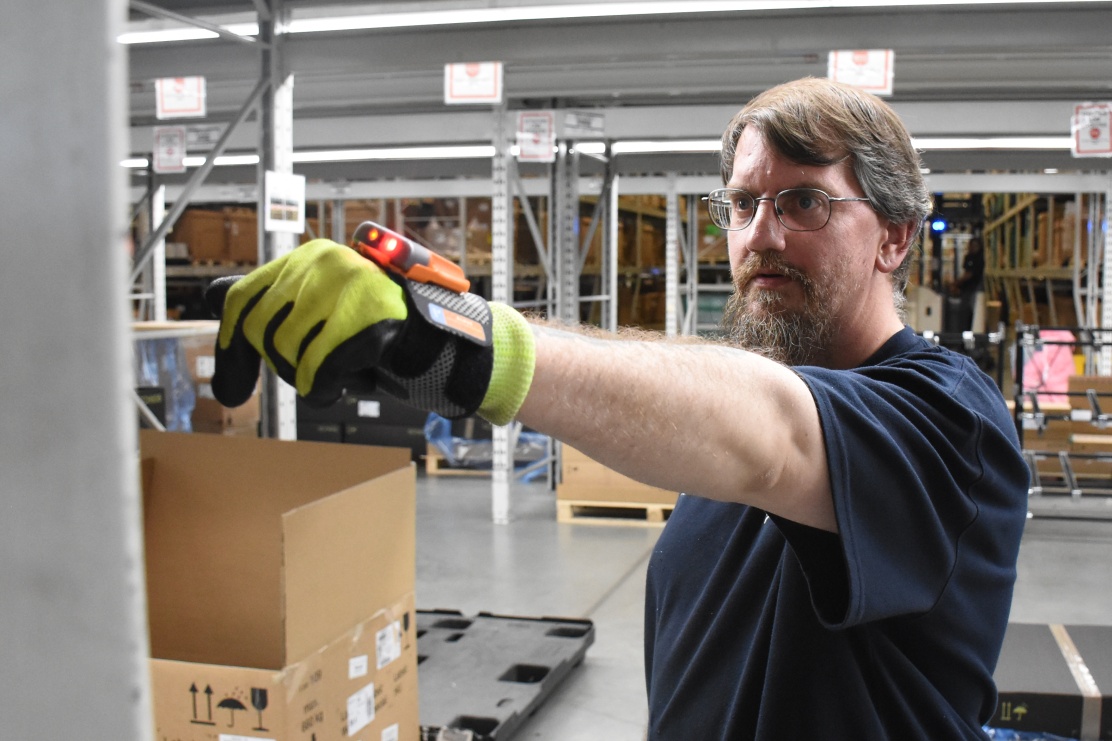
Associate demonstrates the Scanner Glove holding out his arm in logistics area.

Scanner Glove.

Assembly and logistics associates are using a wearable technology that makes work for hundreds of associates faster and more efficient.  Working with a German startup company, BMW developed a scanner glove to replace the use of scanning guns. The smart glove has a bar code scanner that is comfortably attached to the back of the hand. This was first used at BMW’s Dingolfing plant at the spare parts logistics center. This new innovation enables the associate to have both hands free and is helping to improve efficiency, quality, processes and ergonomics.

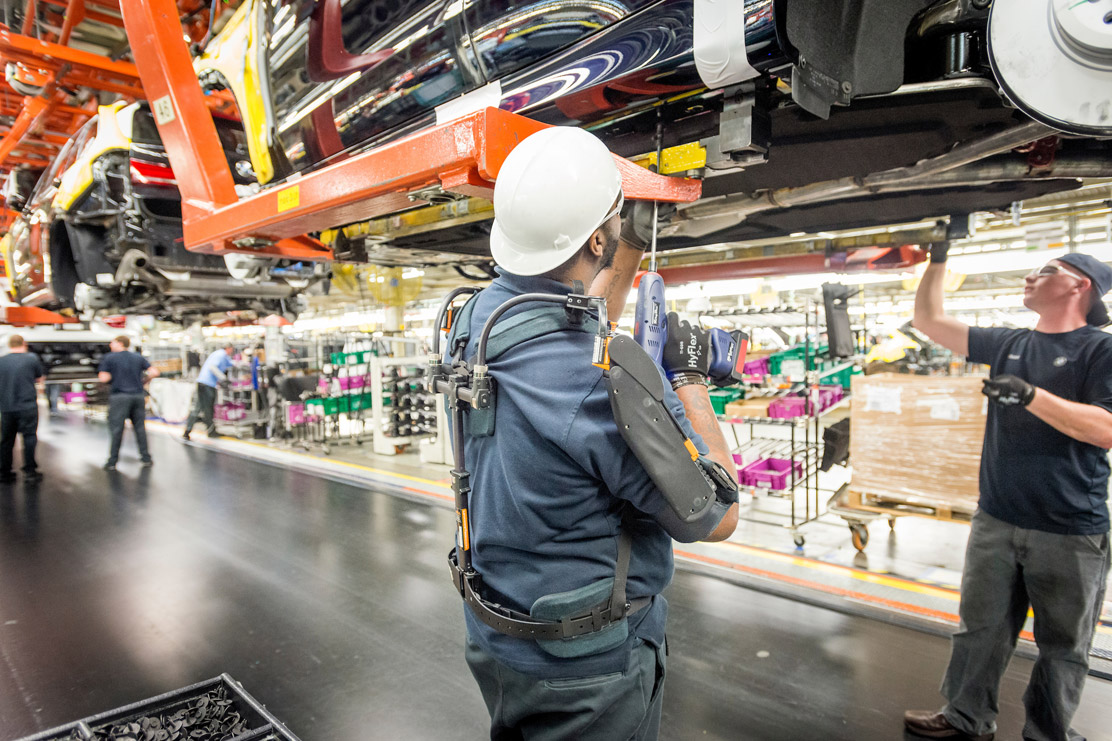
Associate in Assembly wears Exoskeleton Vest while working under a car body.

Exoskeleton Vest.

BMW Plant Spartanburg was the first automotive plant in the world to use an exoskeleton for overhead work. The current exoskeleton is a wearable innovative vest that significantly reduces stress and fatigue for associates who perform overhead work. This special vest, which is fitted to each individual associate, transfers the weight of the arms to the body’s core, evenly distributing the load to reduce stress. The vest provides arm support that helps elevate and support an associate’s physical arms as he/she works. The associate still maintains freedom of movement and motion while working. There are several other exoskeletons currently being trialed throughout the plant. BMW continues to lead the way in this field.

ABB Plug Robots in Paint Shop process area.

Plug Robots.

When the vehicle goes through the paint shop, there are dozens of holes on the underbody that allows the paint fluids to escape during the e-coat/phosphate bath.  Prior to going to through the assembly process the holes are plugged in, much of the process is performed by ABB robots.

When the vehicle enters the cell, the robot takes a vision picture of each hole that it’s programmed to plug. The robot checks for the roundness of the hole and makes sure the plug is going into the correct hole. It installs the plug, then takes another picture to ensure the plug has been installed correctly. The robots install between 80 and 95 percent of the 75 holes on every vehicle.

BMW Group Plant Spartanburg Facility Highlights.

BMW Manufacturing employs more than 11,000 people at its 10-million-square-foot campus. Associates at the Spartanburg plant assemble the BMW X3, X5, X6, X7, and XM Sports Activity Vehicles and Coupes and their variants. Since 1994, our associates have been proud to assemble more than 7.3 million safe, premium-quality BMWs for our customers around the world. According to the U.S. Department of Commerce, the BMW Group is one of the largest automotive exporters by value from the U.S. with a total export value of about $10.1 Billion in 2024.
The primary technologies involved in the entire process are one press shop, three body shops, two paint shops, two assembly halls, and several logistics centers. The Spartanburg plant assembles more than 1,500 vehicles per day, running on two shifts. More than 50 percent of the plant’s vehicles are exported to nearly 120 countries around the world. Many of our completed vehicles are loaded onto rail cars at the plant; then, a train transports them to the port in Charleston, South Carolina, or other southern ports, where they are shipped to Europe, China and other global destinations. BMWs for the U.S. market are loaded onto auto transport carriers at the plant.